Showing posts with label Religious Freedom. Show all posts

Wednesday, December 14, 2016

Review: Strange Gods: A Secular History of Conversion by Susan Jacoby

Strange Gods: A Secular History of Conversion by Susan Jacoby

If you, like me, grew up receiving religious education, you likely encountered conversion stories. For Muslims, an important topic of our weekend school education in the United States is the siirah (biography, "gospel") of the Messenger Muhammad ﷺ. It is replete with stories of how courageous and noble individuals, beginning with his wife Khadija and cousin `Ali, recognized him as God's Messenger. Implicitly and explicitly, those who rejected him were cruel and venal.

Susan Jacoby examines how European Christians told stories about conversion, which, under the scrutiny of modern historical method, turn out to have concealed varying degrees of coercion, and how the post-fascist Catholic Church has attempted to shift blame away from itself for the most grievous period of coercion, the enslavement and murder of six million Jews by Nazi Germany.

Tuesday, October 18, 2016

Review: "The Holy Vote: The Politics of Faith in America" by Ray Suarez

The Holy Vote: The Politics of Faith in America by Ray Suarez is a good introduction to policy discussions with religious claims in the United States in 2006, the time of the book's publication. Some of those issues have waned and new ones have arisen, and, if you've read other books I've reviewed on this blog under the tag Establishment Clause, you may not find these chapters exciting.

Mr. Suarez's style, in this age of bombastic partisanship, is frustratingly documentarian. He includes lengthy quotes from people whose positions he opposes. He avoids snarky rejoinders. Maybe his long years at the United States Public Broadcasting System, which depends on funding from the government and thus must garner support from many diverse sectors of our nation, have increased his ability to listen respectfully to others beyond that of those who publish in ideological Internet news sites, corporate media and crazy, egotistical bloggers like myself!

Wednesday, April 20, 2016

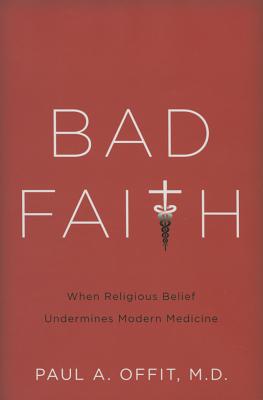
Review: Bad Faith: When Religious Belief Undermines Modern Medicine by Paul Offit

Bad Faith: When Religious Belief Undermines Modern Medicine by Paul A. Offit (Twitter)

Dr. Offit reviews a series of incidents in which children died of treatable illnesses due to the pursuit of their guardians or parents of spiritual healing through supplication in lieu of standard medical practice. He then gives an interpretation of Christianity which rejects spiritual healing as a substitute for medicine. Then he provides an overview of the historically recent development of state protection of children from abuse by their parents and guardians. Finally, he discusses efforts to proscribe and punish parents and guardians who fail to provide standard medical care to the children in their care and resistance by some religious groups which led to religious exemptions to these anti-neglect laws.

The organization of the book makes for a logical progression to Dr. Offit's call for an end to all religious exemptions to laws designed to protect minors.

Monday, May 04, 2015

U.K. Christian Theologian Keith Ward on Laws Prohibiting Blasphemy

Leonard Levy, in his book Blasphemy: Verbal Offense Against the Sacred, from Moses to Salman Rushdie, quotes Keith Ward as a person who, in the wake of the persecution of Salman Rushdie, changed his opinion from support of the United Kingdom's blasphemy laws to their rejection. I acquired the source document to understand Ward's views in more depth.

Thursday, April 09, 2015

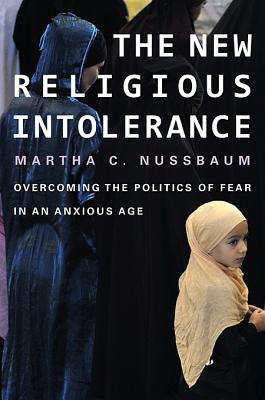
Review: The New Religious Intolerance: Overcoming the Politics of Fear in an Anxious Age by Martha C. Nussbaum

The New Religious Intolerance: Overcoming the Politics of Fear in an Anxious Age by Martha C. Nussbaum (Belknap Press, Hardcover, 9780674065901, 304pp.) Publication Date: April 2012

How can the industrialized, formally democratic societies of Europe and North America increase religious pluralism? European nations "have understood the root of nationhood to lie first and foremost in characteristics that are difficult if not impossible for new immigrants to share. Strongly influenced by romanticism, these nations have seen blood, soil, ethnolinguistic peoplehood, and religion as necessary or at least central elements of a national identity." (p. 13) Other nations, such as the United States and India, define "nationhood in terms of political ideals and struggles," thus somewhat opening the door. (p. 16)