Check out this great offer from Saqi Books. Free ebooks on Palestine through May 17, 2021.
H/t Arab Lit.

Check out this great offer from Saqi Books. Free ebooks on Palestine through May 17, 2021.
H/t Arab Lit.


Frantz Fanon is currently Philosopher of the Month at the Oxford University Press website.
— Existentialism (@rethinkexistent) May 7, 2021
12 journal papers and book chapters are free to read online or download: https://t.co/b43ZHCtYDC#PhilosopherOTM @OUPPhilosophy pic.twitter.com/nZzJoEXJyg

Omar Mohamed related to Ms. Jamieson his experiences and thoughts about his life in the Dadaab Refugee Complex in Kenya. Ms. Jamieson drew sketches and added text in panels, and Iman Geddy added color.
The result is an engaging tale which communicates to readers some aspects of life as refugees. This is particularly important for people in the United States, where refugees are often portrayed as dangerous.
Ms. Jamieson's website has a resource list to learn more about Dadaab's inhabitants.
Omar Mohamed asks that people support his charity, Refugee Strong.
The political radical in me wishes the book dealt with why the civil war in Somalia has continued for so many decades.

I have my prejudices about graphic novels. Are they just a way for illiterate people to say they read books? But then, if the purpose of books is communication, may not images be as or more effective than prose?
Perhaps my prejudice is the result of my perceived inability to draw. With Ms. Jamieson's remote instruction during the Zoom call, I was able to sketch a child running.
I have been supporting American Relief Agency for the Horn of Africa.
Here is the book's trailer:

This book flushes out in great detail arguments you should have ready when your anti-black family members, friends and acquaintances casually say things like, "This is a good neighborhood, there are no blacks here," or "We came here with nothing, now look at how well we're doing. If blacks are poor, it must be their fault."
Baradaran examines different periods of USA history after the end of its civil war and abolition of slavery.** In each period, compensation to the enslaved peoples and their descendants is rejected in favor of half-measures which cost the state nothing and produce only symbolic and psychological benefits. And "half-measures" is hardly the right word in most instances. We need phrases such as quarter, eighth, one-sixteenth measures.

I hope readers of this blog, Muslims in particular, will attempt to understand secularism in a non-polemical manner. It isn't licentiousness (الإباحية), and it can be uncommitted on essential religious positions, so it is not equivalent to atheism.
Lindsay's layman definition of secularism is "the view that: government should not involve itself with religious matters; religious doctrine should play no role in shaping public policy or in the discourse about public policy; and religious institutions and beliefs should not enjoy a privileged position within society." [p. 18]

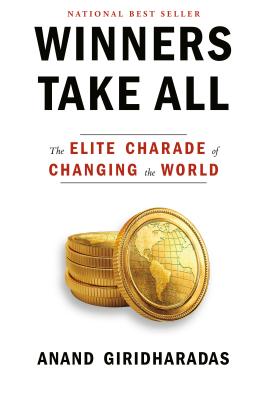
MarketWorld is an ascendant power elite that is defined by the concurrent drives to do well and do good, to change the world while also profiting from the status quo. It consists of enlightened businesspeople and their collaborators in the worlds of charity, academia, media, government and think tanks. It has its own thinkers, whom it calls thought leaders, its own language, and even its own territory -- including a constantly shifting archipelago of conferences at which its values are reinforced and disseminated in translated into action. MarketWorld is a network and community but it is also a culture and state of mind.
These elites believe and promote the idea that social change should be pursued principally through the free market and voluntary action, not public life and the law and the reform of the systems that people share in common; that it should be supervised by the winners of capitalism and their allies and not be antagonistic to their needs; and that the biggest beneficiaries of the status quo should play a leading role in the status quo's reform. [p. 30]

Mary Wollstonecraft Shelley (1797-1851) is most famous for Frankenstein; or The Modern Prometheus. A friend suggested her 1826 novel The Last Man was especially poignant during the COVID-19 pandemic.
If you can ignore the Victorian-era obsession with facial characteristics and the casual assumptions of European, in particular British, superiority to the rest of the world, the novel does have some excellent, thought-provoking passages.
Quotations are lifted from the Romantic Circles website page on the novel. The narrator is Lionel Varney, the sole survivor of a plague and its resulting chaos. I've added my thoughts in bold.
Dick Wolf's Law and Order franchise is a serial promoter of Islamophobia and other forms of stereotyping, as I've documented on this blog. One early episode of the original series achieved quantum anti-black racism in a 30 second clip.
Season 6, Episode 20, entitled "Night," aired in May, 2005. Here's some excerpts from the script. Mildred Contana is the immigrant rights advocate who has been trying to get the police to investigate a series of rapes against undocumented women who are too afraid of deportation to report the crimes.


Ali Noorani identifies that cultural advocacy was the missing ingredient: "When Americans were looking for an answer to their questions of cultural identity, we gave them a political answer instead." [p. 30]

The writers on The Simpsons never considered the impact the character Apu had on actual people. When Hari was interviewing a former producer who pointed out that the show's portrayal of the evil oligarch Mr. Burns was stereotypical and Hari pointed out that one couldn't compare the positions of oligarchs and convenience store operators in society, the producer said that the only consideration in the writers' room was whether dialog was funny. Hari then points out that the only reason Apu and his accent are funny is because society is racist.
Updated October 26, 2025 - The film is now available on YouTube!

It's refreshing to see a depiction of USA Muslims without violence and with loving family relationships. Yet the film has a twist which I didn't see coming and a satisfying resolution, so I can recommend it for more than just its representational value.
The film is available for streaming from Alchemiya & Kweli TV.
The film has a Facebook Page. Here's the IMDB entry.
You can subscribe to be notified if a BamadiTV program airs in your locale.

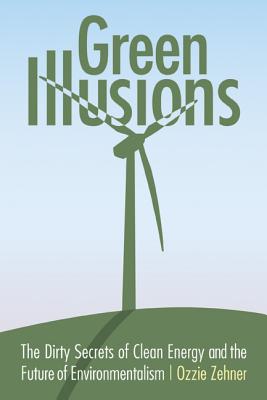 I watched the documentary Planet of the Humans and acquired Green Illusions: The Dirty Secrets of Clean Energy and the Future of Environmentalism, whose author, Ozzie Zehner, was a producer.
The book has three sections. The first debunks the idea of clean energy production. This is especially difficult to read, because I had never entertained serious doubts that humanity could and should continue to expand its energy production as long as it used "clean" & "renewable" energy such as solar, wind, tidal and (one day!) nuclear fusion. I'm an avid consumer of science fiction and futurism, and most of these cultural products assume that humanity has solved its environmental limits while maintaining an ever-increasing standard of living.
A few lines from Light of the Stars: Alien Worlds and the Fate of the Earth by Adam Frank explains why physicists believe this is theoretically impossible, but Ozzie Zehner's documentary and book brought this point home to me.

I first heard of Maia Szalavitz from the Citations Needed Podcast episode 99, The Cruel, Voyeuristic Quackery of Rehab TV Shows. Her book Unbroken Brain: A Revolutionary New Way of Understanding Addiction basically contradicts everything I'd ever thought I knew about addiction to mind-altering substances before involvement with supporters of recreational and medicinal cannabis legalization and decriminalization, who opened my eyes to the compound hypocrisies and harms of prohibition and incarceration.

If you are a thoughtful, decent human being at this time, you should be bobbing between waves of anger and panic, on the verge of drowning in a sea of insanity. Now, imagine sitting down to write a book. Likely, by the second or third page, your prose would resemble that of the author character, played by Jack Nicholson, in the 1980 horror movie The Shining. Suketu Mehta, through writing skill and knowledge, transformed these righteous emotions into This Land is Our Land: An Immigrant's Manifesto.
This book is being written in sorrow and rage -- as well as hope. I am angry: about the staggering global hypocrisy of the rich nations, having robbed the poor ones of their future, now arguing against a reverse movement of peoples -- not to invade and conquer and steal, but to work. Angry at the ecological devastation that has been visited upon the planet by the West, and which now demands that the poor nations stop emitting carbon dioxide. Angry at the depiction of people like my family and the other families that have continued in my family's path, because the had no other choice, as freeloaders, drug dealers, and rapists. I'm tired of apologizing for moving. These walls, these borders, between the peoples of the earth: they are of recent vintage, and they are flimsy. [pp. 8-9]
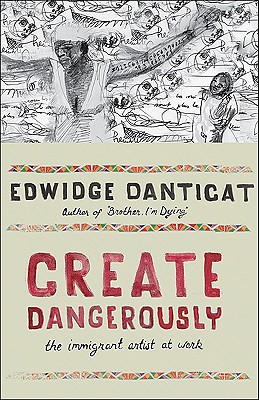
I've gathered some quotes from Edwidge Danticat's collection of essays entitled Create Dangerously: The Immigrant Artist at Work.
Create dangerously, for people who read dangerously. This is what I’ve always thought it meant to be a writer. Writing, knowing in part that no matter how trivial your words may seem, someday, somewhere, someone may risk his or her life to read them. p. 10
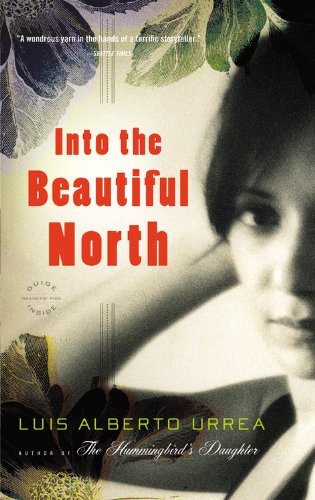 Luis Alberto Urrea's 2009 novel Into the Beautiful North is a comedy against the background of the cruel forces which drive rural Mexicans to migrate to the United States despite the risks they face on the journey, the hostility they encounter, the dangers government immigration enforcement officers pose and the relatively modest rewards the migrants obtain in exchange for enduring these risks as well as the long, hard hours they work and the bitter loneliness of exile.
And then, the peso dropped in value. Suddenly, there was no work. All the shrimp were shipped north, tortillas became too expensive to eat, and people started to go hungry. We told you change was bad, the old timers croaked. Nobody had heard of the term immigration. Migration, to them, was when the tuna and the whales cruised up the coast, or when Guacamaya parrots flew up from the south. So the men started to go to el norte. … The modern era had somehow passed Tres Camarones by, but this new storm had found a way to siphon its men away, out of their beds and into the next century, into a land far away. P. 4
