Showing posts with label Feminism. Show all posts

Tuesday, August 02, 2022

Lessons for Muslims from "Jesus and John Wayne: How White Evangelicals Corrupted a Faith and Fractured a Nation" by Kristin Kobes Du Mez


Kristin Kobes Du Mez provides answers in Jesus and John Wayne: How White Evangelicals Corrupted a Faith and Fractured a Nation to those who wondered why the vast majority of self-identified Christian evangelicals supported the publicly vulgar & openly sinful Donald Trump for President of the United States in the 2016 election cycle. Historians like Du Mez and Kevin Kruse claim that the answer to this apparent dilemma lies in decades of United States history. While Kevin Kruse emphasized oligarchs' fear of organized labor and social welfare programs and communism, Du Mez emphasized the misogynistic, white supremacist messaging in support of overseas imperialism and domestic patriarchy. I encourage readers to benefit from both books. I encourage Muslim readers to ponder the following questions:

Monday, November 08, 2021

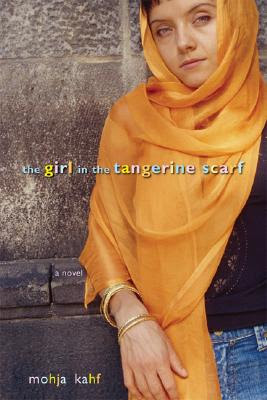
Review: "The Girl in the Tangerine Scarf" by Mohja Kahf

When I first started this blog, Mohja Kahf's The Girl in the Tangerine Scarf was the kind of book I imagined this blog would focus on. And I had my copy for some time, but, along with thousands of other books on my shelves & my virtual to-read lists, I had not gotten around to reading it. A friend told me he had assigned it to students in his class, and he asked me to participate. Assuming the mantle of "native informant" (ha!), I sped through the book and am now writing as a way to organize my thoughts for the class.

Khadra Shamy, the protagonist, is the daughter of Wajdy & Ebtehaj, Syrian immigrants who eventually move to a town south of Indianapolis, Indiana to work at the Dawah Center. There, they and their co-workers work to realize the ideal Muslim community and raise their children to carry on that legacy after them. Khadra suffers some abuse from prejudiced classmates at the public school and neighbors in the apartment complex, but, for the most part, she grows into the young woman which the leaders of the Dawa Center envisioned: She prays, reads Quran, supports causes of Muslims suffering around the world and scrupulously upholds the interpersonal morals and gender roles of the community.

Tuesday, August 10, 2021

Mona Eltahawy Review of Season 1 of "We Are Lady Parts"

Season 2 is scheduled to be released beginning May 30, 2024scheduled to be released beginning May 30, 2024 on Peacock.

I had earlier recommended Hind Makki's review of Season 1 of the TV show We Are Lady Parts. A month before, Mona Eltahawy published her reasons why the show is outstanding:

To have had a show like We Are Lady Parts while I was in my 20s and fighting off Niqabis on the Metro, the Brigade of Hijabis-Aren’t-Supposed-To-Watch-Wild-At-Heart, and the You’re-Making-Us-Look-Bad so-called friends, would have freed up so much of my cosmic energy, I might have truly taken over the world. -- read more --


Monday, March 18, 2019

Documentary: "The War to Be Her" by Erin Heidenreich

 
Description on PBS.org site: "In the Taliban-controlled area of Waziristan in northwestern Pakistan, where sports for women are decried as un-Islamic and girls rarely leave their houses, young Maria Toorpakai (Instagram) defies the rules by disguising herself as a boy so she can play squash freely. As she becomes a rising star, however, her true identity is revealed, bringing constant death threats on her and her family.

"In July 2018, POV asked The War to Be Her filmmaker Erin Heidenreich what's happened since the cameras stopped rolling."

PBS created a supplemental reading list, a lesson plan and discussion guide. The film has a Facebook page.

Saturday, December 08, 2018

Suggested Reading List from "Girls of the Crescent"

Habeeba Husain profiled Girls of the Crescent in the 2018 November/December issue of Islamic Horizons. Sisters Zena & Mena Nasiri founded Girls of the Crescent in 2018 to promote materials in public libraries which represent the variety of experiences of Muslim girls and women. On December 7, 2018, I downloaded its suggested books and searched for them in the online Georgia public library system PINES. I created a public list for the books Girls of the Crescent recommended which are available in the PINES-participating public libraries. I used worldcat.org to create a list for the books I couldn't find in Georgia's PINES. A few books are not in either list.

I hope library users in my state of Georgia would request these materials. Remember, if your branch library doesn't have a book you want, you can request the branch library to retrieve the book from other participating libraries. You can do this online with a PINES account or at the circulation desk. Also note that some public libraries don't participate in PINES, particularly those in Atlanta.

I've reviewed children's books on this blog.

Tuesday, May 08, 2018

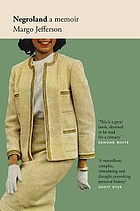
"Negroland: A Memoir" by Margo Jefferson

I'm sharing a few thoughts on Margo Jefferson's Negroland: A Memoir.

An idea which struck me was her insistence that contemplation of suicide is a civil right or privilege which blacks in America should seek to earn:
But one white female privilege had always been withheld from the girls of Negroland. Aside from the privilege of actually being white, they had been denied the privilege of freely yielding to depression, of flaunting neurosis as a mark of social and psychic complexity. A privilege that was glorified in the literature of white female suffering and resistance. A privilege Good Negro Girls had been denied by our history of duty, obligation, and discipline. Because our people had endured horrors and prevailed, even triumphed, their descendants should be too strong and too proud for such behavior. We were to be ladies, responsible Negro women, and indomitable Black Women. We were not to be depressed or unduly high-strung; we were not to have nervous collapses. We had a legacy. We were too strong for that. I craved the right to turn my face to the wall, to create a death commensurate with bourgeois achievement, political awareness, and aesthetically compelling feminine despair. (pp. 171-2)
I've never been very good dealing with people with depression, and I criticized Jay Asher's Th1rteen R3asons Why.

Here's a passage on housing segregation in Hyde Park, the home of University of Chicago, in the 1960s (p. 147):


Here's a passage about the mental price Margo Jefferson paid as a child trying to navigate the rules of race, gender and class which had been imposed on her and how her adult life has been an attempt to become "a person of inner consequence." (p. 156)


Tuesday, July 04, 2017

Friday, January 15, 2016

Feminism in Caleb Carr's "The Angel of Darkness"

I read Caleb Carr's The Alienist for a book club, and I'm almost done with its sequel, The Angel of Darkness. It has some great material to help people understand some aspects of feminism. One of the characters, Sara Howard, explains to Stevie, the novel's narrator and a street kid in the care of her colleague, why society's attitude towards women (misogyny) may explain the behavior of the murder suspect, Elspeth Hunter, they are investigating and people's attitudes towards her. The passage begins on page 437 and continues for a few pages.


Wednesday, January 13, 2016

Dancing is a Sin: Two One-Woman Plays from Egypt - Jan 14, Boston Performance, Streamed Live & Archived


h/t M. Lynx Qualey at Arab Lit.

Thursday, September 17, 2015

Review: Ummakkuttiyude Kunjikinaavukal by B. M. Suhara

Do you read Malayalam (Kairali) or know someone who does? Meena T. Pillai reviewed Ummakkuttiyude Kunjikinaavukal by B. M. Suhara. The review was published in The Hindu of September 17, 2015.
The Hindu has many columns tagged Malayalam literature.

I have not read the book.

Tuesday, March 11, 2014

Film: Outlawed in Pakistan by Habiba Nosheen and Hilke Schellmann

This film aired as an episode in PBS's Frontline program on May 28, 2013. Visit its website for the entire film and features. Azra at Muslima Media Watch wrote an excellent review on September 10, 2013. Obviously, the film makes obvious the wretched state of police, criminal justice and judicial proceedings in Pakistan. People who claim to be working to reform their governments should prioritize professionalization of the police to better investigate rape.

Another important lesson for Muslims in the United States is the value of public television and radio, despite the limitations (and here) of PBS and NPR.

Filmaker Habiba Nosheen has a website, and she is on Twitter. The second filmmaker, Hilke Schellmann, is also on Twitter.

P.S. In 2008 on this blog I reviewed the film Shame by Mohammed Ali Naqvi about the rape of Mukhtar Mai.