David McRaney's book You Are Not So Smart: Why You Have Too Many Friends on Facebook, Why Your Memory Is Mostly Fiction, and 46 Other Ways You’re Deluding Yourself presents phenomena which, in our modern view of the supremacy of reason and free will, should not impact humans' behavior. One is the stereotype threat (Chapter 42, pp. 232-3):
"Psychologists Claude Steele and Joshua Aronson conducted a study in 1995 where they had white and black Americans take the Graduate Record Examination. The GRE is a standardized test usd by many colleges to determine whether or not to accept graduate students. ... Steel and Aronson told half of their subjects they were testing for intelligence, which they hypothesized would add an extra level of stress the other half wouldn't feel. When they got back the results, the white students performed about the same whether or not they were told it was a test of how smart they were. The black students, though, primed by the strereotype threat, performed worse in the group who believed the test would reveal their true intelligence. According to Steel and Aronson, the social stigma of being an African-American messed with their minds. Attempting to fight the stereotype, they had unwelcome thoughts walking around and making noise in their brains while they solved word problems and figured fractions. The white students, free from those fears, had more mind space in which to work. This same sort of experiment has been repeated with gender, nationality, and all sorts of conditions. Psychologists call it the stereotype threat. When you fear you will confirm a negative stereotype, it can become a self-fulfilling prophecy not because the stereotype is true, but because you can't stop worrying that you could become an example proving it."

Wednesday, December 17, 2014
Saturday, December 13, 2014
Play Dramatizes Israeli Soldiers' Testimonies of Atrocities of Occupation
"It's What We Do" attempts to bring reality of Israeli soldiers' testimonies to US audiences.
Josh Ruebner of US Campaign to End the Israeli Occupation recommended this project. Please consider supporting it.
Josh Ruebner of US Campaign to End the Israeli Occupation recommended this project. Please consider supporting it.
Check out promo 4 new play by @azizatwit on Israeli soldiers' testimony to @BtSIsrael on brutality to Palestinians https://t.co/y66hEFDMzf
— Josh Ruebner (@joshruebner) December 11, 2014
Pam Nice is involved in the project.


Thursday, December 11, 2014
Review: The Lives of Man by Abdallah ibn Alawi Al-Haddad

I have not read the book.
Sunday, November 23, 2014
Review: The Imperial University: Academic Repression and Scholarly Dissent by Piya Chatterjee and Sunain Maira (eds)
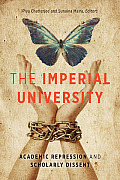
[T]his is, far and away, the most affecting, comprehensive, and visionary collection of essays published to date on the politics of contemporary higher education. The book memorably sketches out what Raymond Williams called the “structure of feeling” in today’s university: the lived experience of ideological contestation, economic restructuring, professional vulnerability, political imagining, and political foreclosure. In this achievement, The Imperial University is sui generis: it should be bookmarked by historians of neoliberal higher education and used as a brick by those seeking to build an invigorated academic Left. ... read more ...One of the essays in this volume is by Steven Salaita. Bill Mullen has written in defense of Steven Salaita.
Salaita firing shows where Zionism meets neoliberalism at US universities | Tithi Bhattacharya & Bill V. Mullen http://t.co/FXPttxtJ9j
— Electronic Intifada (@intifada) September 4, 2014
I have not read the book.
Friday, November 21, 2014
Film: Where Should the Birds Fly? by Fida Qishta -- Now Available
I had earlier promoted funding of this movie. It is now available by DVD and by streaming through Distrify. The film's website has a link to a guidebook.
Saturday, November 15, 2014
Review: An Unnecessary Woman by Rabih Alameddine
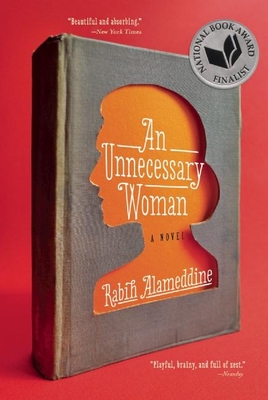
Wrote a feminist novel!
http://t.co/434qwffhFH
— Rabih Alameddine (@rabihalameddine) November 15, 2014
Julie Kearney wrote a review of An Unnecessary Woman
by Rabih AlameddineRosecrans Baldwin also did a review for NPR.
Read our interview w/ @rabihalameddine, whose novel, An Unnecessary Woman, is on shortlist for the Nat. Book Award http://t.co/zc68JE16GO
— The AAWW (@aaww) November 14, 2014
I have not yet read the book.
Free (English) eBooks from Yatakhayyaloon - Arabic Language Science Fiction - Nov 15 & 16 Only
To get our free eBooks go to your local Amazon site and search for Yatakhayaloon. They are free all day 15th & 16th. @SindbadSciFi
— يتخيلون (@yatakhayaloon) November 15, 2014
Thursday, November 13, 2014
Review: Aisha: The Wife, the Companion, the Scholar by Reşit Haylamaz

I have not read the book.
The publisher is Tughra Books.
Updated December 4, 2014:
@aymanfadel @resithaylamaz @tughrabooks @muslimahmerican Yes it is translated from Turkish, but most people say it is a good translation...
— Tughra Books (@tughrabooks) December 4, 2014
Wednesday, November 12, 2014
Review: "How Big is Allah?" by Emma Apple

Thursday, November 06, 2014
Quote: Chris Hedges on Friendship and Comradeship in "War is Force that Gives Us Meaning"
There are few individual relationships – the only possible way to form friendships – in war. There are not the demands on us that there are in friendships. Veterans try to regain such feelings, but they fall short. Gray wrote that the “essential difference between comradeship and friendship consists, it seems to me, in a heightened awareness of the self in friendship and in the suppression of self-awareness in comradeship.”
Comrades seek to lose their identities in the relationship. Friends do not. “On the contrary, “Gray wrote, “friends find themselves in each other and thereby gain greater self-knowledge and self-possession. They discover in their own breasts, as a consequence of their friendship, hitherto unknown potentialities for joy and understanding.”
The struggle to remain friends, the struggle to explore the often painful recess of two hearts, to reach the deepest parts of another’s being, to integrate our own emotions and desires with the needs of the friend, are challenged by the collective rush of war. There are fewer demands if we join the crowd and give our emotions over to the communal crusade.
The only solace comes from simple acts of kindness. They are the tiny, flickering candles in a cavern of darkness that sustain our common humanity.Find the book in your local library.
Monday, November 03, 2014
Documentary Film "American Promise" Free Online Thru Nov 8, 2014
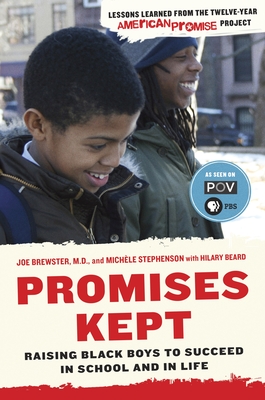
The United States Public Broadcasting Service's POV series is streaming American Promise online through November 8, 2014. A February 2014 interview with the film's producer and director, Michèle Stephenson (Twitter) updates the 2004 film. A companion book to the film is Promises Kept: Raising Black Boys to Succeed in School and in Life by Joe Brewster and Michèle Stephenson with Hilary Beard. The film has an official website.
Saturday, November 01, 2014
Quotes from Dune by Frank Herbert
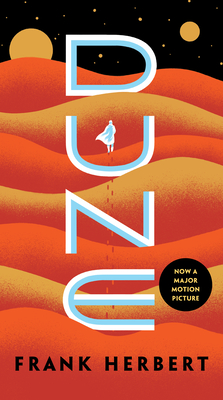
Readers were asked to record their favorite quotes and submit it to the show. The whole series is incredible. Here are a few quotes I recorded. You can listen to the ones NPR selected from all listeners.
The text is available on line at archive.org. But buy the book. Also, check out the Calvin and Mu'addib Tumblr.
Prescience
The prescience, he realized, was an illumination that incorporated the limits of what it revealed — at once a source of accuracy and meaningful error. A kind of Heisenberg indeterminacy intervened: the expenditure of energy that revealed what he saw, changed what he saw. And what he saw was a time nexus within this cave, a boiling of possibilities focused here, wherein the most minute action — the wink of an eye, a careless word, a misplaced grain of sand — moved a gigantic lever across the known universe. He saw violence with the outcome subject to so many variables that his slightest movement created vast shiftings in the pattern. The vision made him want to freeze into immobility, but this, too, was action with its consequences . The countless consequences — lines fanned out from this cave, and along most of these consequence-lines he saw his own dead body with blood flowing from a gaping knife wound.Kynes's Father on the Masses and the Leavings
"Arrakis is a one-crop planet," his father said. "One crop. It supports a ruling class that lives as ruling classes have lived in all times while, beneath them, a semihuman mass of semislaves exists on the leavings. It's the masses and the leavings that occupy our attention. These are far more valuable than has ever been suspected."Keynes's Last Thought
Then, as his planet killed him, it occurred to Kynes that his father and all the other scientists were wrong, that the most persistent principles of the universe were accident and error . Even the hawks could appreciate these facts.
Monday, October 20, 2014
Interview with Kecia Ali on "The Lives of Muhammad"
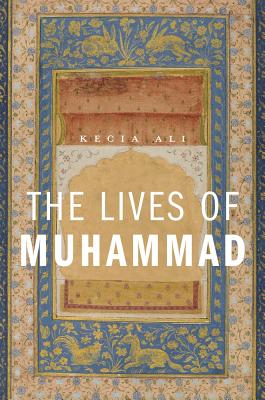
I have reviewed Professor Kecia Ali's book Sexual Ethics and Islam. I have not read this book. I have linked to other interviews Professor Preville has done. United States National Public Radio has published a review.
Via @nprbooks: Many Views Of Muhammad, As A Man And As A Prophet http://t.co/5iDqOZocXP
— Joseph R. Preville (@JosephPreville) October 20, 2014
I have not read the book.
Monday, October 13, 2014
The Africans: A Triple Heritage by Ali A Mazrui
Professor Ali Al-Amin Mazrui died today.
Prof. Ali Mazrui has died http://t.co/zRzkwxcCN1 - a great scholar and wonderful human being. He will be missed!
— Sheila Musaji (@SheilaMusaji) October 13, 2014
Friday, October 10, 2014
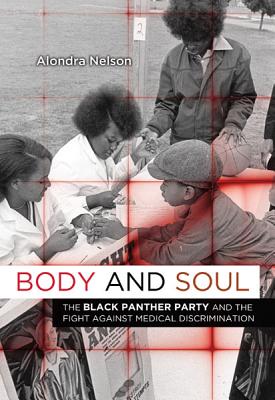
Review: Body and Soul: The Black Panther Party and the Fight Against Medical Discrimination by Alondra Nelson
"When I give food to the poor, they call me a saint. When I ask why they are poor, they call me a communist."
Dom Hélder Pessoa Câmara (1909 – 1999), Catholic Archbishop of Olinda and Recife, Brazil, 1964 to 1985
Body and Soul: The Black Panther Party and the Fight Against Medical Discrimination by Alondra Nelson.
University of Minnesota Press, 2011, 289 pp.
Professor Alondra Nelson (Twitter) has written a book which all activists should read. It focuses on the advocacy, activism and ideology of the Black Panther Party (BPP) in healthcare.
Sunday, September 21, 2014
Wednesday, September 17, 2014
Monday, September 15, 2014
Film: Fruitvale Station

Fruitvale Station is an important dramatic reenactment of the last day of Oscar Grant's life. Ryan Coogler was the director, and Forest Whitaker was the producer.
Saturday, September 13, 2014
Review: Observing the Observer: The State of Islamic Studies in American Universities by Mumtaz Ahmad, Zahid Bukhari & Sulayman Nyang (Eds)
Faiza Rahman wrote a review of Observing the Observer: The State of Islamic Studies in American Universities by Mumtaz Ahmad, Zahid Bukhari & Sulayman Nyang (Eds). It was published in The Express Tribune Sunday Magazine, August 31, 2014.
Entry in Worldcat.org
I have not read the book.
Wednesday, August 20, 2014
"I don't want a lot of gab from a bunkshooter in my religion" by Carl Sandburg
I don’t want a lot of gab from a bunkshooter in my religion.
I won’t take my religion from any man who never works except with his mouth and never cherishes any memory except the face of the woman on the American silver dollar.This is an excerpt from Carl Sandburg's poem To a Contemporary Bunkshooter. It was first published in collection entitled Chicago Poems in 1916. I first heard it on an audio cassette book. Here is a performance I found on YouTube.
Subscribe to:
Posts (Atom)