
The novel uses racist anti-black slurs frequently, as did the author in real life. None of these appears in the quotes for this blog entry.


Mary Wollstonecraft Shelley (1797-1851) is most famous for Frankenstein; or The Modern Prometheus. A friend suggested her 1826 novel The Last Man was especially poignant during the COVID-19 pandemic.
If you can ignore the Victorian-era obsession with facial characteristics and the casual assumptions of European, in particular British, superiority to the rest of the world, the novel does have some excellent, thought-provoking passages.
Quotations are lifted from the Romantic Circles website page on the novel. The narrator is Lionel Varney, the sole survivor of a plague and its resulting chaos. I've added my thoughts in bold.
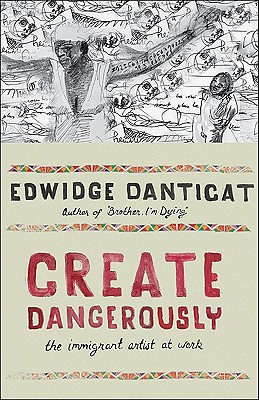
I've gathered some quotes from Edwidge Danticat's collection of essays entitled Create Dangerously: The Immigrant Artist at Work.
Create dangerously, for people who read dangerously. This is what I’ve always thought it meant to be a writer. Writing, knowing in part that no matter how trivial your words may seem, someday, somewhere, someone may risk his or her life to read them. p. 10


 |
| Image of folio from Metropolitan Museum of Art |

Like many brilliant men, he had grown up dead cold. Beginning at about twelve, probably, with the total rejection common to those of extraordinary mental powers, the "See here: this is all wrong -- a mess -- all a lie -- and a sham --," he swept it all away, everything, as men of his type do; and then instead of being a son-of-a-bitch as most of them are, he looked around at the barrenness that was left and said to himself, "This will never do." And so he had learned tolerance, kindness, forebearance, and even affection like lessons. (emphasis in original)
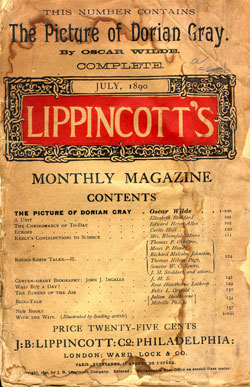
[Lord Henry Wotton] pictured to himself with silent amusement the tedious luncheon that he had missed by staying so long with Basil Hallward. Had he gone to his aunt's, he would have been sure to have met Lord Goodbody there, and the whole conversation would have been about the feeding of the poor and the necessity for model lodging-houses. Each class would have preached the importance of those virtues, for whose exercise there was no necessity in their own lives. The rich would have spoken on the value of thrift, and the idle grown eloquent over the dignity of labour. It was charming to have escaped all that!The full text is available online.

 |
| Harold Finch from CBS's "Person of Interest" reading It Can't Happen Here |
There are few individual relationships – the only possible way to form friendships – in war. There are not the demands on us that there are in friendships. Veterans try to regain such feelings, but they fall short. Gray wrote that the “essential difference between comradeship and friendship consists, it seems to me, in a heightened awareness of the self in friendship and in the suppression of self-awareness in comradeship.”
Comrades seek to lose their identities in the relationship. Friends do not. “On the contrary, “Gray wrote, “friends find themselves in each other and thereby gain greater self-knowledge and self-possession. They discover in their own breasts, as a consequence of their friendship, hitherto unknown potentialities for joy and understanding.”
The struggle to remain friends, the struggle to explore the often painful recess of two hearts, to reach the deepest parts of another’s being, to integrate our own emotions and desires with the needs of the friend, are challenged by the collective rush of war. There are fewer demands if we join the crowd and give our emotions over to the communal crusade.
The only solace comes from simple acts of kindness. They are the tiny, flickering candles in a cavern of darkness that sustain our common humanity.Find the book in your local library.
The prescience, he realized, was an illumination that incorporated the limits of what it revealed — at once a source of accuracy and meaningful error. A kind of Heisenberg indeterminacy intervened: the expenditure of energy that revealed what he saw, changed what he saw. And what he saw was a time nexus within this cave, a boiling of possibilities focused here, wherein the most minute action — the wink of an eye, a careless word, a misplaced grain of sand — moved a gigantic lever across the known universe. He saw violence with the outcome subject to so many variables that his slightest movement created vast shiftings in the pattern. The vision made him want to freeze into immobility, but this, too, was action with its consequences . The countless consequences — lines fanned out from this cave, and along most of these consequence-lines he saw his own dead body with blood flowing from a gaping knife wound.Kynes's Father on the Masses and the Leavings
"Arrakis is a one-crop planet," his father said. "One crop. It supports a ruling class that lives as ruling classes have lived in all times while, beneath them, a semihuman mass of semislaves exists on the leavings. It's the masses and the leavings that occupy our attention. These are far more valuable than has ever been suspected."Keynes's Last Thought
Then, as his planet killed him, it occurred to Kynes that his father and all the other scientists were wrong, that the most persistent principles of the universe were accident and error . Even the hawks could appreciate these facts.