Thursday, March 26, 2015

Teacher Confronts Islamophobia with "The Garden of My Imaan" by Farhana Zia


Amy Vatne Bitliff used Farhana Zia's The Garden of My Imaan in her public middle school.
Then two days prior to Zia’s visit, one of my students who had really been pushing against the text said, “You mean a Muslim is coming here?! They chop people’s heads off. If she’s coming here, I’m not coming to school." ... read more ...

Friday, March 20, 2015

Review: How Does it Feel to Be a Problem?: Being Young and Arab in America by Moustafa Bayoumi

How Does It Feel to Be a Problem? Being Young and Arab in America by Moustafa Bayoumi (Penguin Press HC, The, Hardcover, 9781594201769, 304pp.)

The author relates the stories of seven Arab-American youth from Brooklyn, New York.

It's hard for me to relate to the stories in this book because I'm much older than the subjects, I've never lived in a place with a lot of Arabs (or great ethnic diversity) and I've never had the family, financial and legal struggles many of them had.

Nevertheless, the stories were engaging, and I read the book quickly. Each subject's story made me think about things differently, and I suspect each reader would draw unique lessons for himself or herself.

Sunday, March 01, 2015

Walls of Freedom: Street Art of the Egyptian Revolution


To purchase the English version of the book, visit the publisher's web page. The book has its own website. The Facebook page has ongoing developments, including the Egyptian government's efforts to erase the graffiti.

This article reports that the copies were seized in Alexandria over a fee dispute, not censorship.

Wednesday, February 25, 2015

Review: Roots: The Saga of an American Family by Alex Haley

Roots: The Saga of an American Family
When I was a child, before DVRs and Tivo and even video cassette recorders, the first big TV event I remember was the ABC miniseries "Roots" based on Alex Haley's book of the same title. I have this memory (or imagination) of people looking at their watches and saying, "I know what you are telling me is important, but I gotta get home to watch the next episode of Roots." I thought I had watched it, but I had forgotten everything except Kunta Kinte's capture and somebody saying, "Lizzie, Lizzie." I was fortunate to acquire a minimally-scratched used recording of Avery Brooks's abridged narration of the 30th anniversary edition, which included an illuminating forward by Michael Eric Dyson.

Having read Alex Haley's first breakthrough book, The Autobiography of Malcolm X, and Marable Manning's biography of Malcolm X, in which Haley plays a prominent role, I felt like I heard the Nation of Islam's influence, especially in Haley's description of Kunta Kinte's village in The Gambia and his rejection of the descendants of African slaves whom he encountered.

So much has been written about this book. I strongly encourage readers of this blog to read or listen to a copy or at least watch the miniseries.


Sunday, February 15, 2015

Review: The Eternal Nazi: From Mauthausen to Cairo, the Relentless Pursuit of SS Doctor Aribert Heim by Nicholas Kulish & Souad Mekhennet

The Eternal Nazi: From Mauthausen to Cairo, the Relentless Pursuit of SS Doctor Aribert Heim
By Nicholas Kulish & Souad Mekhennet
(Doubleday, Hardcover, 9780385532433, 320pp.)
Publication Date: March 25, 2014

I originally learned about this book following tweets regarding a January 10, 2015 newspaper article by Nicholas Kulish entitled "Old Nazis Never Die." Many twitter users came to the conclusion that escaped Nazis exerted strong influence in Egypt and Syria, and many attributed some of the animosity in those countries to the Zionist project to Nazi-style anti-antisemitism. A French film, which I have not seen, explores Nazis who fled to Egypt and Syria. See this article written by its director, Géraldine Schwarz, and published in Le Monde of January 2, 2015.

So I wanted to read this book to learn about this influence, but that is not its main focus. The authors focus on the process of denazification after World War II, from whose chaotic, unfocused, politicized origins emerged human rights laws and eventually war crime tribunals.

Monday, February 09, 2015

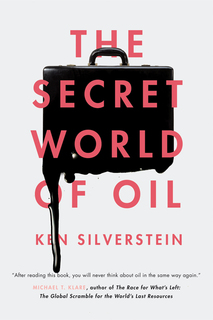
Review: The Secret World of Oil by Ken Silverstein

The Secret World of Oil by Ken Silverstein
Hardback, 240 pages ISBN: 9781781681374
May 2014

Note that the author of this book is not this Ken Silverstein, who writes in energy industry publications.

If you care about the poor or the environment, be prepared to vomit in your mouth at nearly every other page of this account of the oil and other resource extraction industries.

Ken Silverstein devotes a chapter to each of the following categories of players in this woeful tragedy: the fixers, the dictators, the traders, the gatekeepers, the flacks, the lobbyists and the hustlers.

Friday, February 06, 2015

Nadia's Ramadan - Film for Use in Public Schools

Unity Productions Foundation has produced a short film, Nadia's Ramadan, with a professionally made lesson plan, for use in public schools.

Please approach your children's public schools to see how this resource can best be utilized.


Nadia's Ramadan - Preview from Unity Productions Foundation on Vimeo.

Reclaiming Malcolm X & Muslim Anti-Racism Collaborative


The Muslim Anti-Racism Collaborative is sponsoring a series of programs under the label "Reclaiming Malcolm X." I don't want to try to summarize my impressions because I want you to listen to the programs as the recordings become available and participate in face-to-face or online discussions.

Tuesday, February 03, 2015

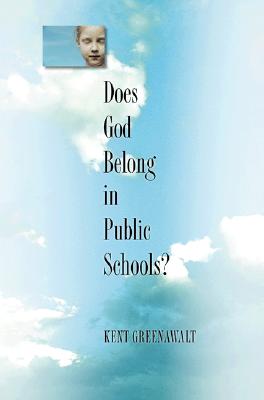
Review: Does God Belong in Public Schools? by Kent Greenawalt

Does God Belong in Public Schools? by Kent Greenawalt (Princeton University Press, Paperback, 9780691130651, 261pp.)

Professor Greenawalt's book examines different common claims made by parents, students and school employees that public schools have violated the Free Exercise clause by interfering with their practice of religion.

Saturday, January 31, 2015

Review: The World Until Yesterday: What Can We Learn from Traditional Societies? by Jared Diamond

I love popular science books. I hope that many would be translated into languages Muslims often speak, particularly Arabic, since many educated Arabs only read Arabic, unlike Urdu, for example, of which I'm told its educated speakers typically can read English.

One of the authors whose books I suggested should be translated is Jared Diamond, author of Guns, Germs and Steel and Collapse. His latest book, The World Until Yesterday: What We Can Learn from Traditional Societies?, also deserves the widest possible audience.

By comparing how modern and traditional societies handle war, raising of children, care of the elderly, health risks, religion, language and diet, The World Until Yesterday stretches our conception of the ranges of choices available to us in a matter similar to the best science fiction.

Friday, January 30, 2015

Review: On the Means of Beholding The Prophet in a Dream by Yusuf ibn Ismail al-Nabahani

by Imam Yusuf b. Isma'il al-Nabahani, translator Imam Abdul Aziz Suraqah.  

A Muslim's Book Shelf reviewed the book:

This book presents 40 means that Imam Yusuf al-Nabahani has collected in order to see Prophet Muhammad  in a dream. ... read more ...

I have not read the book.

Sunday, January 25, 2015

Sanad Collective: Letters to the Beloved Writing Competition

Letters to the Beloved ﷺ

As-salāmu ʿalaykum wa raḥmātullahi wa barakatūh
Sanad Collective is inviting you to express your feelings for the Prophet ﷺ by composing a letter, from you to him ﷺ. ... read more ... 

Sunday, January 18, 2015

Anti-Terrorism Messages Lack Substance


This morning, I heard a segment on USA National Public Radio entitled Building Ties to Counter Religious Extremism in LA. The segment features two law enforcement types extensively, and two Muslims, Amina Mirza Qazi and Salam al-Maryati, who present different points of view. I've written on this blog extensively on the Global War on Terror, so I'd encourage you to review those posts.

Friday, January 16, 2015

ATL Discusses "Mornings in Jenin" by Susan Abulhawa, Jan 31, 2015, 6pm

This book has also been translated into Arabic. This blog entry is an adaptation of an e-mail I received from Ingrid Torsay through a mailing list. See if this is going on in a city near you.
-------------------------------------------------
Atlanta is participating in the One Book, Many Communities project, organized by Librarians and Archivists with Palestine. We will discuss Mornings in Jenin by Palestinian-American author Susan Abulhawa. Please join us for a lively discussion and a pot luck supper:

31 January, Saturday, 6:00 PM
Our Lady of Lourdes (cafeteria)
25 Boulevard NE
Atlanta, GA  30312

The 'One Book, Many Communities' project by Librarians and Archivists with Palestine aims to introduce readers to the richness of Palestinian literature, and create a broader awareness and understanding of Palestinian history and the struggle for self-determination."

Communities throughout the world will be reading and discussing Mornings in Jenin. Just a few of the places are Rome, Venice, Bologna, Trieste, Naples, and 3 or 4 more in Italy; Dèvillac, France; Tel Aviv, Israel; Malmö and Stockholm in Sweden; Ramallah, Palestine; Quebec and Toronto in Canada; and several cities in the U.S.

Everyone is welcome. The Atlanta-Fulton Public Library has four copies available. Come even if you have not finished reading. Contact information: Ingrid Torsay (404) 438-6598 or by e-mail

Update: Jan 16, 2015 23:15: The author Susan Abulhawa is excited about the worldwide response to this project.
Updated February 17, 2015: Yousef Munayyer's review of the book.

Wednesday, January 07, 2015

Review: In God's Path: Arab Conquests and The Creation of an Islamic Empire by Robert Hoyland

Stuart Kelly reviewed In God’s Path: Arab Conquests and The Creation of an Islamic Empire by Robert Hoyland in The Scotsman of January 7, 2015.
This kind of book always eschews its embedded nature in contemporary discourse: it’s the facts, man, not a comment on the contemporary cradled in archaism. That is true, but it would be beneficial to everyone if both Muslims and non-Muslims read it, realised their shared history, understood their differences, and appreciated that the stories can always be retold, reinterpreted, revised and reimagined. A Norman knight and a Korean monk can give us insights into Islam; Islamic writing, thinking and behaving can hold up a mirror to the West as well. Read more
I have not read the book.

Wednesday, December 17, 2014

David McRaney on the Stereotype Threat - Another Way in Which We Are Not So Smart

David McRaney's book You Are Not So Smart: Why You Have Too Many Friends on Facebook, Why Your Memory Is Mostly Fiction, and 46 Other Ways You’re Deluding Yourself presents phenomena which, in our modern view of the supremacy of reason and free will, should not impact humans' behavior. One is the stereotype threat (Chapter 42, pp. 232-3):

"Psychologists Claude Steele and Joshua Aronson conducted a study in 1995 where they had white and black Americans take the Graduate Record Examination. The GRE is a standardized test usd by many colleges to determine whether or not to accept graduate students. ... Steel and Aronson told half of their subjects they were testing for intelligence, which they hypothesized would add an extra level of stress the other half wouldn't feel. When they got back the results, the white students performed about the same whether or not they were told it was a test of how smart they were. The black students, though, primed by the strereotype threat, performed worse in the group who believed the test would reveal their true intelligence. According to Steel and Aronson, the social stigma of being an African-American messed with their minds. Attempting to fight the stereotype, they had unwelcome thoughts walking around and making noise in their brains while they solved word problems and figured fractions. The white students, free from those fears, had more mind space in which to work. This same sort of experiment has been repeated with gender, nationality, and all sorts of conditions. Psychologists call it the stereotype threat. When you fear you will confirm a negative stereotype, it can become a self-fulfilling prophecy not because the stereotype is true, but because you can't stop worrying that you could become an example proving it."